

How Trust Markers are weighted and validated
Transparent scoring matters. Knowing how markers are weighted, validated, and combined provides the evidence editors need to make confident, defensible decisions.

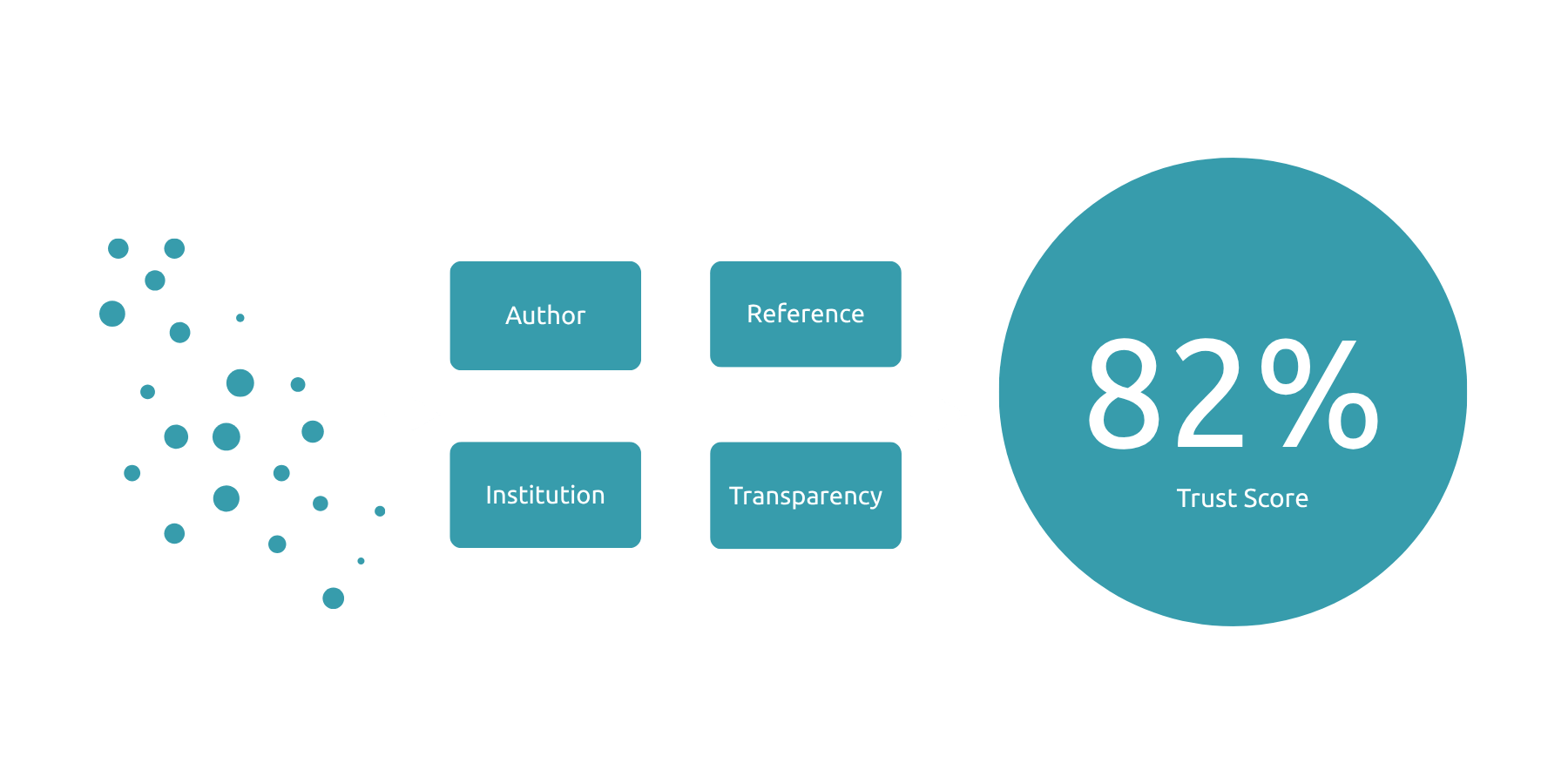
Trust Signals is a research integrity screening system designed for academic publishers.
How to screen manuscripts for integrity
Screening manuscripts for integrity requires evaluating authorship, references, affiliations, and disclosures.
Trust Signals brings these checks together using transparent, evidence-based scoring — helping editors identify what warrants closer review before peer review begins.
How Trust Scoring works
(at a high level)

Signals are detected and validated against authoritative sources, including analysis of how closely an author’s prior work aligns with the submitted manuscript topic

Risk is identified across author networks — not just individuals

Signals are grouped and weighted across key dimensions

A transparent score is generated and continuously refined
Scoring is grounded in verifiable metadata and continuously refined based on editorial feedback.
Identify risk across author networks—not just individuals
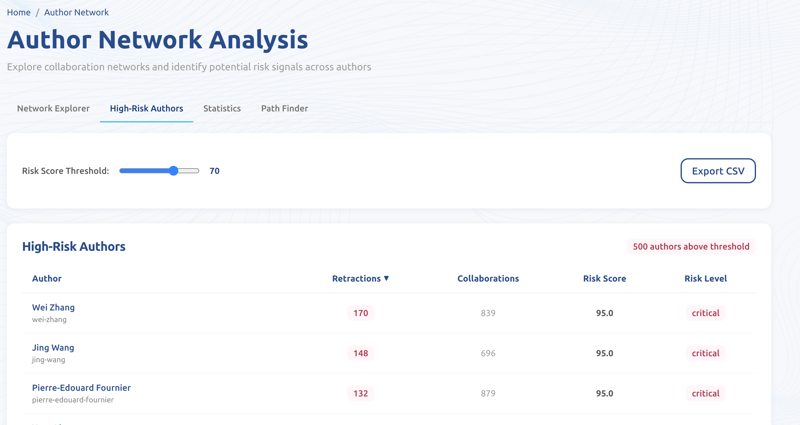
Surface authors with elevated risk based on retractions, collaboration
volume, and network patterns — helping you identify systemic issues, not just isolated cases.
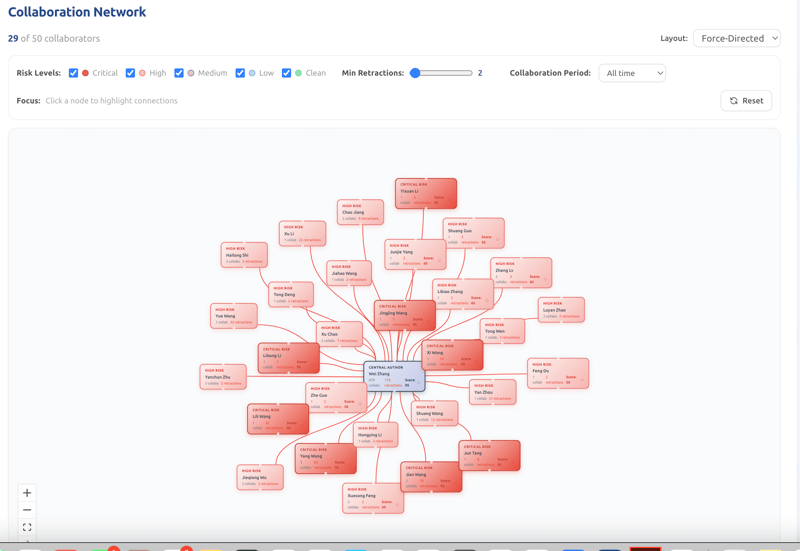
Explore collaboration networks to see how high-risk authors are connected.
Identify patterns of risk across author networks patterns that aren’t visible at the manuscript level.
Risk doesn’t exist in isolation. Collaboration networks reveal how it spreads.
Reliable for editorial decision-making
Transparent logic
Adaptive baselines
Every trust score maps to verifiable.
Custom tuning
Fine-tune dimensions to match editorial priorities.
Evidence-based learning
Continuously refined through editorial outcomes and updated metadata standards.